

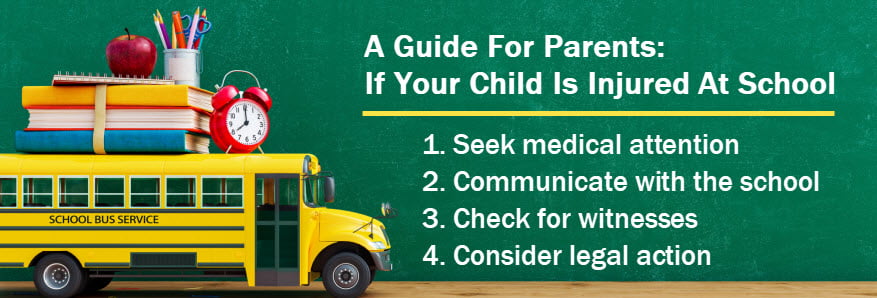
If an accident at school results in injury to your child, it is important to first address the child’s medical needs. This may involve visiting the school nurse or taking the child to a healthcare professional, depending on the severity of the injury. The parent should communicate with the school to understand how the injury occurred and gather all relevant details. It is important to review the school’s incident report, if available. The parent should also provide emotional support to the child, reassuring them and addressing any fears or anxieties they may have about returning to school. Keeping open lines of communication with both the child and the school helps to better ensure the child’s well-being and safety.
A child can suffer these types of injuries from:
- Playground accidents: Falls from playground equipment can result in fractures or head injuries.
- Sports injuries: Participation in sports can lead to sprains, strains, or concussions.
- Classroom accidents: Slips, trips, or falls in the classroom can cause minor to severe injuries.
- School shootings: Although rare, these tragic events can result in serious physical and emotional harm.
These accidents can result in minor scraps and cuts to serious injuries. The following will provide more detailed information about each step a parent should take after such an accident, so the parent can move forward with confidence when navigating this situation.
Step #1: Medical attention
Whether seeking care with the school nurse or a medical professional, it is important to get copies of any documentation or medical records from the incident. If possible, take a few photos to further document the injuries. If your child requires ongoing care, keep records for each visit. An organized file of this information can prove helpful if you need to hold another party financially accountable for the cost of the accident.
Step #2: Communicate with the school
Once your child’s immediate medical needs are met, reach out to a school administrator for information about the incident. Ask if a report was filed and, if so, request a copy. If one is not available, encourage the school to provide a written report so you have information about the accident to help guide you when caring for your child’s physical and emotional injuries.
Step #3: Check for witnesses
Ask the school for a list of individuals that witnessed the incident. This could include administrators, teachers, support staff, and others who work in the building as well as volunteers or bystanders. It is helpful to have names and contact information for these individuals in case you need additional information about the incident.
Step #4: Consider legal action
Depending on the details of the incident, you may wish to pursue legal action. It is important to understand the legal implications of a school injury so you can protect your child’s rights. The following can help you gain a better understanding of how to protect your child in your specific situation:
- Review school policies: Familiarize yourself with the school’s policies on accidents and injuries. This can provide insight into the school’s responsibilities.
- Consult a legal professional: If the injury is severe or involves negligence, consult a lawyer with experience in personal injury law to better understand your options.
- Understand liability: Determine if the school, staff, or another party may be liable for the injury. This can influence potential legal actions.
Injuries at school can be overwhelming for both children and parents. By taking immediate action, documenting the incident, and understanding the legal aspects, you can help better ensure your child’s safety and protect their rights.